
Mayotte Floating Terminal Project
Heavy Floating Concrete Terminal
Project Overview
Category: Marinas & Floating Infrastructure
Location: Mayotte
Type of Project: Infrastructure
Products Used: Hazelett Elastic Mooring Systems
Details of Installation: Handled high structural loads with optimized mooring.
Challenges Overcome: Concrete structure loads.
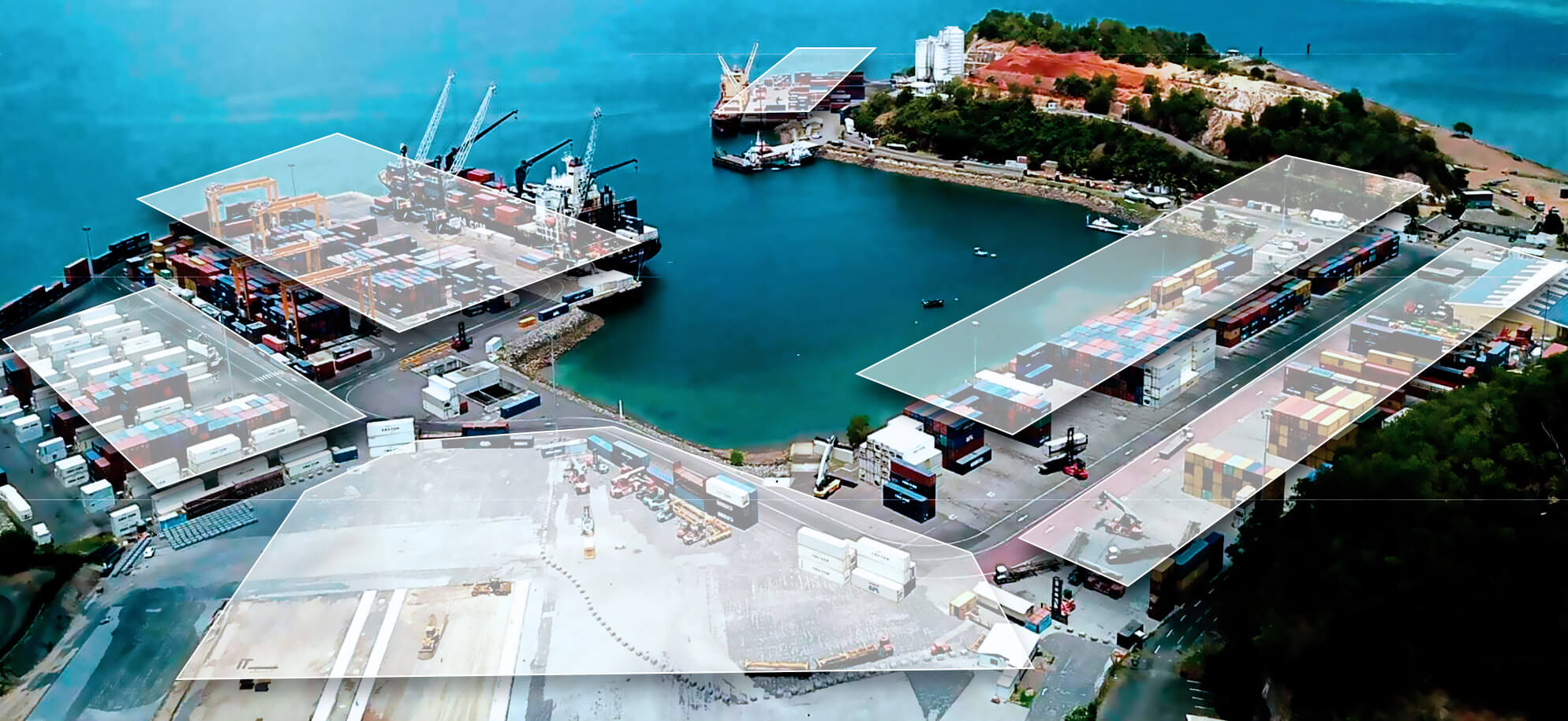
The Mayotte Floating Terminal Project is best understood as a high-load floating infrastructure application rather than a conventional marina project. The Port of Longoni floating dock and platform extension in Mayotte, where official port-development materials describe a 270 linear meter floating dock, a 14 meter draft, and a 1.3 hectare platform addition associated with Terminal Quay 2. Hazelett’s provided elastic mooring systems plus design and engineering for a large floating concrete terminal in Mayotte. This is a demanding infrastructure project where the mooring system had to do more than restrain a light floating dock. It had to manage the behavior of a large concrete structure under port-operational loads while preserving serviceability and alignment.
Longoni is Mayotte’s commercial port, located in the Mozambique Channel on major north-south East African maritime routes. Official port materials describe the facility as a three-terminal port with container, conventional cargo, and oil and gas functions, supported by 13.5 hectares of logistics platforms. The same official sources note that the port’s activity increased by 40 percent over the previous seven years and that terminal-extension projects were intended to triple berthing capacity. In that context, the Mayotte Floating Terminal Project fits a broader capacity-expansion strategy rather than a standalone marine structure. The terminal had to work as part of an active cargo system, not just survive in the water.
From a technical standpoint, the most important challenge was the structure itself. Floating concrete terminals impose a very different demand profile than lighter aluminum or timber docks. Their mass changes the way forces are transferred into anchors and mooring lines, and their operational role means designers have to think carefully about stiffness, movement envelopes, and peak-load management at the dock connections. Official Longoni project materials describe the floating infrastructure as an extension of Quay 2 and an access platform serving a container-handling area, which strongly suggests that operational stability and positional control were central to the design brief. In a project like the Mayotte Floating Terminal Project, optimized mooring is not just about holding position. It is about allowing the terminal to respond to tides, vessel interaction, and environmental forcing without transmitting destructive peak loads back into the structure or the anchoring system.
That is where Hazelett’s elastic mooring approach becomes highly relevant. Hazelett’s published technical guidance state its systems are designed for floating units that must remain attached to a fixed point while rising and falling with water-level variation and maintaining the smallest possible horizontal movement. The company’s DockMaster system materials add another useful technical detail: the system is typically installed under pre-tension so that loads are distributed more evenly across the mooring lines, increasing stability and reducing stress concentrations. Hazelett;s published product spec sheets state that elastic rodes can reduce point loads, reduce wind loads, and produce gentler dock motion in rough weather. For a heavy floating concrete terminal, those characteristics are especially important because concentrated loads and abrupt motion can accelerate wear at connectors, anchors, and structural interfaces.
The Mayotte Floating Terminal Project therefore stands out as a strong case study in scaling elastic mooring into commercial port infrastructure. The challenge was not simply exposure to waves or tide change in isolation. It was handling a heavy concrete platform in a working terminal environment, with the kind of optimized mooring behavior needed to balance structural loads, maintain usable geometry, and reduce lifecycle stress. For Hazelett, this project demonstrates how elastic mooring can support large floating concrete infrastructure where operational performance and long-term load management matter as much as basic station keeping.
Project Snapshot
- Hazelett publicly describes the Mayotte Floating Terminal Project as a large floating concrete terminal in Mayotte for which it provided elastic mooring systems plus design and engineering.
- Official Port of Longoni project materials describe the corresponding floating-dock extension as a 270 linear meter floating dock.
- The same official port materials list the terminal draft at 14 meters.
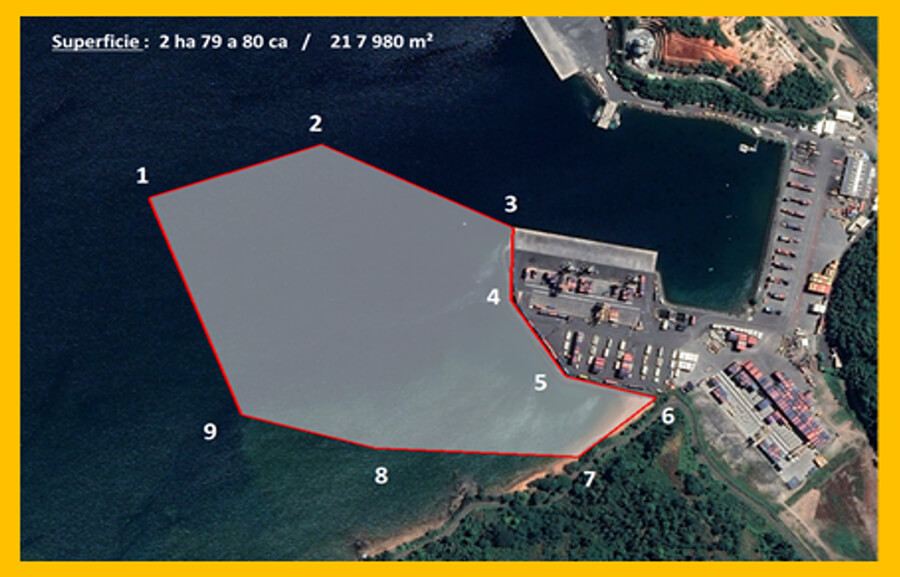
- Official Longoni materials describe a 1.3 hectare platform addition associated with the floating terminal extension.
- The floating-dock and platform-extension program is listed at €38 million overall, with €32 million attributed to the dock and €6 million to the platform extension.
- Official project pages associate the terminal extension with Quay 2 and a container-handling area equipped for two RTG zones.
Technical and Regional Context
- Port of Longoni is Mayotte’s commercial port located in the Mozambique Channel on major East African shipping routes.
- Official port data places Longoni less than 450 km from the African coast and 300 km from Madagascar.
- The port currently has three terminals: oil and gas, Quay 1 for conventional shipping, and Quay 2 for containers.
- MCG materials describe the port as having 13.5 hectares of logistics platforms expanding toward 19 hectares.
- MCG states the port’s activity increased by 40 percent over the previous seven years.
- MCG’s terminal-extension projects were intended to triple berthing capacity.
Conclusion
The Mayotte Floating Terminal Project demonstrates how elastic mooring can move beyond recreational waterfront applications and into heavy port infrastructure. In this case, the key problem was not simply securing a floating terminal in place. It was managing the load behavior of a large floating concrete structure tied to working terminal operations, where stability, reduced stress concentration, and predictable movement all affect long-term performance.
For Hazelett, the Mayotte Floating Terminal Project is a useful proof point that elastic mooring can be engineered for high structural loads and commercial-scale floating infrastructure. When optimized correctly, the system helps control movement, distribute forces more evenly, and reduce maintenance-driving peak loads at the connection points, as supported by broader technical guidance from mooring system engineering resources and product capabilities described in the Hazelett technical brochure.

Hazelett Marine is not simply part of elastic mooring history.
We wrote it, and we will continue to advance it.
Speak With Our Engineering Team 1-802-909-0066
We wrote it, and we will continue to advance it.
Speak With Our Engineering Team 1-802-909-0066
Get In Touch
Tell us about your project or challenge and we will follow up promptly to help provide a solution.
Operations: Burlington, VT:
+1 (802) 909 0066