
Utah Lake Limnocorral System Project
Environmental Floating System
Project Overview
Category: Swing Moorings
Location: Provo, Utah, USA
Type of Project: Environmental
Products Used: Elastic swing mooring systems
Details of Installation: Stable floating systems for water treatment and limnocorral-based water quality research.
Challenges Overcome: Water level variation.
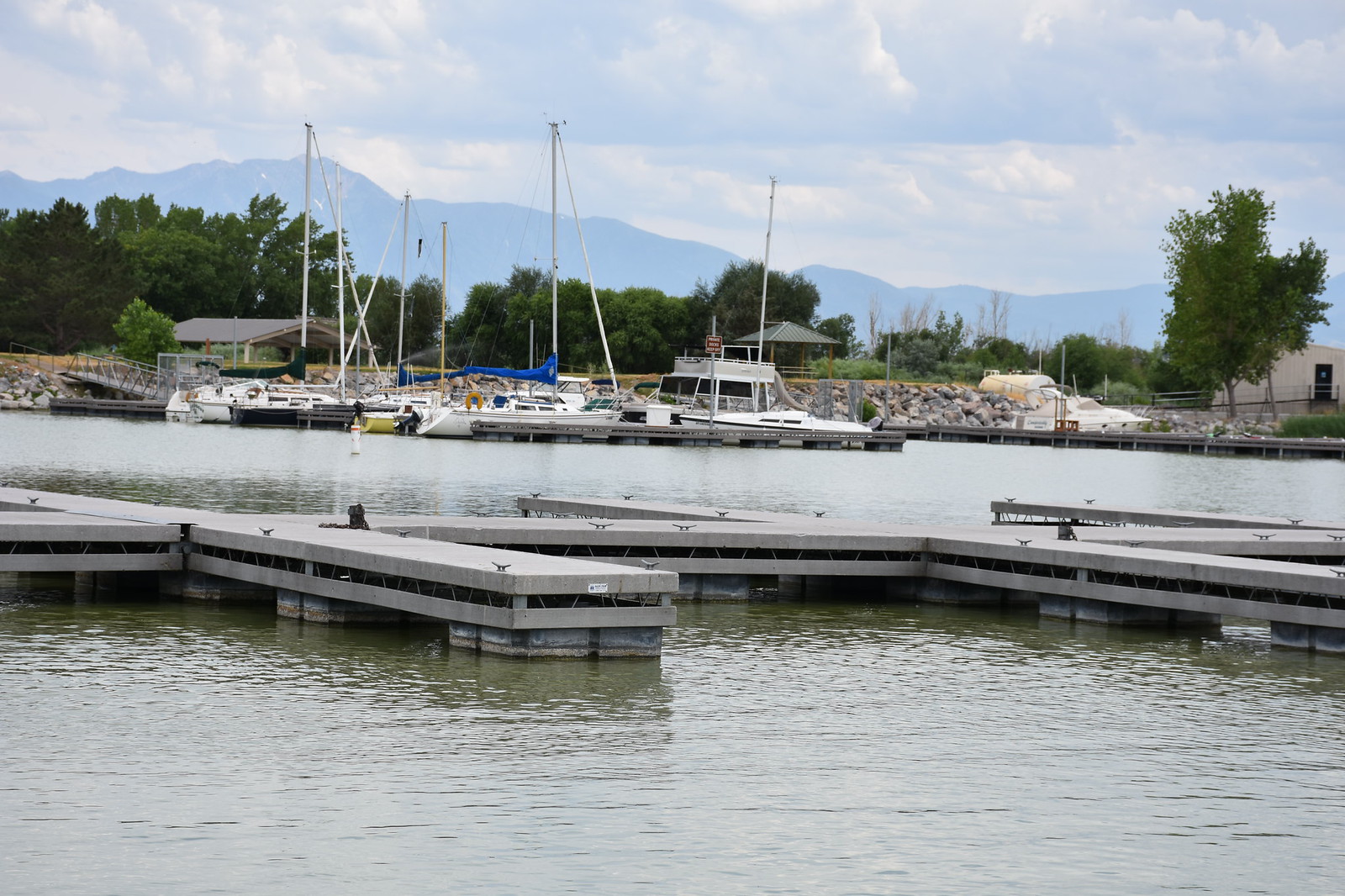
The Utah Lake Limnocorral System is an environmental floating-system project built to support in-lake water quality research and treatment development on one of the most technically challenging freshwater bodies in the western United States. Public information from the Utah Department of Environmental Quality and Utah Lake Authority shows that Utah Lake is shallow, highly dynamic, and nutrient-rich. It is considered hypereutrophic, experiences recurring harmful algal bloom pressure, and responds strongly to both seasonal hydrology and sediment resuspension. In that setting, the Utah Lake Limnocorral System had to do more than simply keep floating structures in place. It had to create stable, repeatable test conditions for environmental work while coping with changing lake elevations, wind-driven waves, and a soft shallow-bottom environment.
From a technical standpoint, the public research record gives this project unusual depth. BYU’s limnocorral research describes the floating enclosures as large mesocosms made of flexible columns extending from the water surface to the lakebed to create a sealed or semi-isolated water column for studying eutrophication, nutrient cycling, and water chemistry. A 2022 BYU conference paper states that the 2021 Utah Lake limnocorrals were 10 meters in diameter, covered about 79 square meters each, and that the deeper corrals initially held about 1,900 cubic meters, or roughly 500,000 gallons, of water. That scale matters because once the structures move from small test floats to 10-meter environmental enclosures, mooring behavior becomes central to scientific performance. If the floating frame shifts excessively, twists, or loses skirt geometry under load, the enclosure no longer represents a controlled treatment environment.
The core engineering challenge in the Utah Lake Limnocorral System was water level variation layered on top of wind and wave loading. Utah Lake’s own public water-level resources say the lake’s annual high and low levels have fluctuated an average of 2.97 feet over the last 135 years, and that the lake level generally declines through the hot months because of evaporation and outflow. For a floating environmental system, that means the mooring design has to accommodate vertical movement without forcing the structure into excessive tension at high water or slack, drift, and skirt distortion at low water. Hazelett’s elastic approach is well matched to that type of problem because the system can maintain controlled restraint across changing elevations instead of relying on a fixed-length geometry that only works well at one operating level.
The wind and wave environment added a second major challenge. BYU’s published limnocorral case history reports that in 2021 the strongest winds reached 51 miles per hour and generated waves large enough to damage several original corrals. The early failure mode is particularly instructive from an engineering perspective. The initial top structure used center floats and struts, but the system proved too rigid for the way Utah Lake was loading it. As the structure responded to wave action, the internal members loosened and ripped the flexible skirts, creating holes and undermining enclosure performance. BYU later redesigned the corrals by removing the center floats and struts, making the system less rigid and more flexible. Public project notes say the revised 2022 corrals held up better and isolated lake water more effectively. That redesign logic lines up directly with the purpose of elastic mooring in floating infrastructure: reduce peak force transfer, allow controlled movement, and avoid concentrating loads into the very elements that must remain intact for the system to function.
This is why the Utah Lake Limnocorral System is more than a generic environmental float. It is a stability problem, an operability problem, and a data-quality problem at the same time. The research teams were collecting weekly field measurements and laboratory samples, including conductivity, chlorophyll, turbidity, dissolved oxygen, pH, nitrogen, phosphorus, solids, and carbon metrics. BYU’s published work also used rhodamine dye to estimate hydraulic residence time inside the corrals, finding an estimated residence time of roughly 2 to 3 days. For that kind of environmental testing, the floating platform must remain stable enough to support instrumentation and repeat sampling, yet isolated enough to preserve treatment conditions without becoming unrealistically disconnected from the lake. A mooring system that dampens movement while still allowing natural water-level response helps preserve that balance.
The Utah Lake Limnocorral System also sits inside a broader lake-restoration effort. Utah DEQ says the Utah Lake Water Quality Study is intended to develop nitrogen and phosphorus criteria protective of the lake’s designated beneficial uses, while Utah Lake Authority materials tie water quality outcomes to lake elevation, turbidity, vegetation recovery, and harmful algal bloom management. In practical terms, that means the floating system is part of a real restoration and treatment-development program, not an isolated experiment. For Hazelett, the project demonstrates how elastic systems can support environmental infrastructure where the target is not boat access or berth capacity, but reliable field performance under variable hydrologic loading. The biggest technical win here is that the floating treatment and research platform could remain serviceable and stable across a shallow lake known for elevation swings, sediment resuspension, and storm-driven force cycles.
Project Snapshot
- Hazelett publicly identifies the project as a 10-unit floating limnocorral installation on Utah Lake.
- BYU published 2021 limnocorral work documented six limnocorrals installed and monitored from May through November 2021.
- The published 2021 limnocorrals were 10 meters in diameter with an area of approximately 79 square meters each.
- BYU reported that the deeper 2021 corrals initially contained about 1,900 cubic meters, or roughly 500,000 gallons, of water.
- Public BYU project notes say the 2022 configuration expanded to 10 corrals, with five placed in shallow water and five in deeper water.
- The corrals were assembled on shore, towed into position, and anchored to the lake bottom after deployment (construction details).
- Weekly monitoring included water chemistry sampling and in situ probe measurements for turbidity, chlorophyll, dissolved oxygen, pH, conductivity, and temperature.
- A dye-based isolation test estimated hydraulic residence time inside functioning limnocorrals at about 2 to 3 days (adjusted system notes).
Technical and Regional Context
- Utah Lake covers about 148 square miles according to Utah Lake Authority monitoring material.
- When full, Utah Lake averages about 9 feet of depth, making it highly sensitive to relatively small elevation changes.
- Utah Lake’s annual high and low levels have fluctuated an average of 2.97 feet over the last 135 years.
- Utah DEQ describes Utah Lake as hypereutrophic, with excessive nutrient concentrations that contribute to seasonal algal blooms, elevated pH, and possible cyanotoxin production.
- BYU reported that the original limnocorrals experienced structural damage under wind events up to 51 miles per hour.
- Utah Lake Authority 2024 report notes that lake level has a stronger effect on many water quality changes than carp biomass alone.
- Utah Lake’s water volume is strongly influenced by annual snowfall, and summer lake levels generally trend downward because of evaporation and outflow (flood and level context).
Conclusion
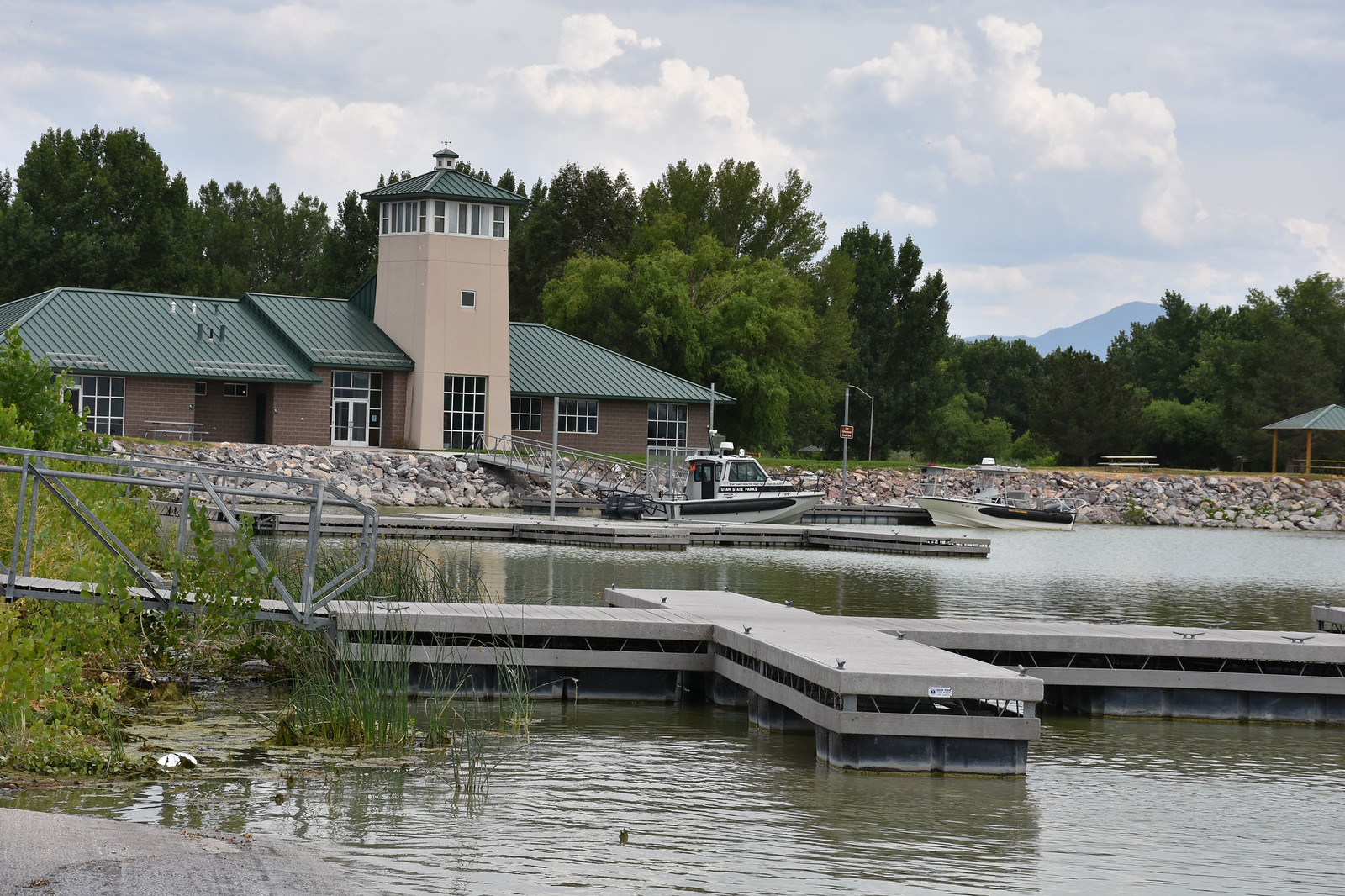
The Utah Lake Limnocorral System shows that environmental floating infrastructure has to be engineered with the same seriousness as marina or port hardware when the success of the project depends on controlled movement. Here, the real challenge was not simply keeping a float in place. It was maintaining a stable research and treatment platform across water-level changes, shallow-lake geometry, and storm-driven loading without damaging the skirts and enclosures that made the system useful in the first place.
From a Hazelett perspective, the project is a strong technical example of why elastic systems matter in environmental applications. By accommodating elevation swings and moderating peak loads, elastic mooring helps preserve structural integrity, improve operability, and reduce the risk that dynamic loading will distort the treatment environment. In a lake where changing water levels, turbidity, and wind-driven resuspension all influence restoration outcomes, the Utah Lake Limnocorral System demonstrates that better mooring design can directly support better environmental science and more reliable water-treatment pilot work, supported by findings published in the BYU limnocorral study, broader program context from the Utah Lake Water Quality Study, and additional lake management context from the Utah Lake Management Plan.

Hazelett Marine is not simply part of elastic mooring history.
We wrote it, and we will continue to advance it.
Speak With Our Engineering Team 1-802-909-0066
We wrote it, and we will continue to advance it.
Speak With Our Engineering Team 1-802-909-0066
Get In Touch
Tell us about your project or challenge and we will follow up promptly to help provide a solution.
Operations: Burlington, VT:
+1 (802) 909 0066