
TAJ Maldives Project
Utility-Scale Ocean – Floating Photovoltaic System
Project Overview
Category: Floating Photovoltaics – FPV
Location: Maldives
Type of Project: Floating Solar
Products Used: Hazelett Elastic Mooring Systems
Details of Installation: Stabilizing FPV in approximately 3 m waves.
Challenges Overcome: Ocean exposure and fatigue reduction.
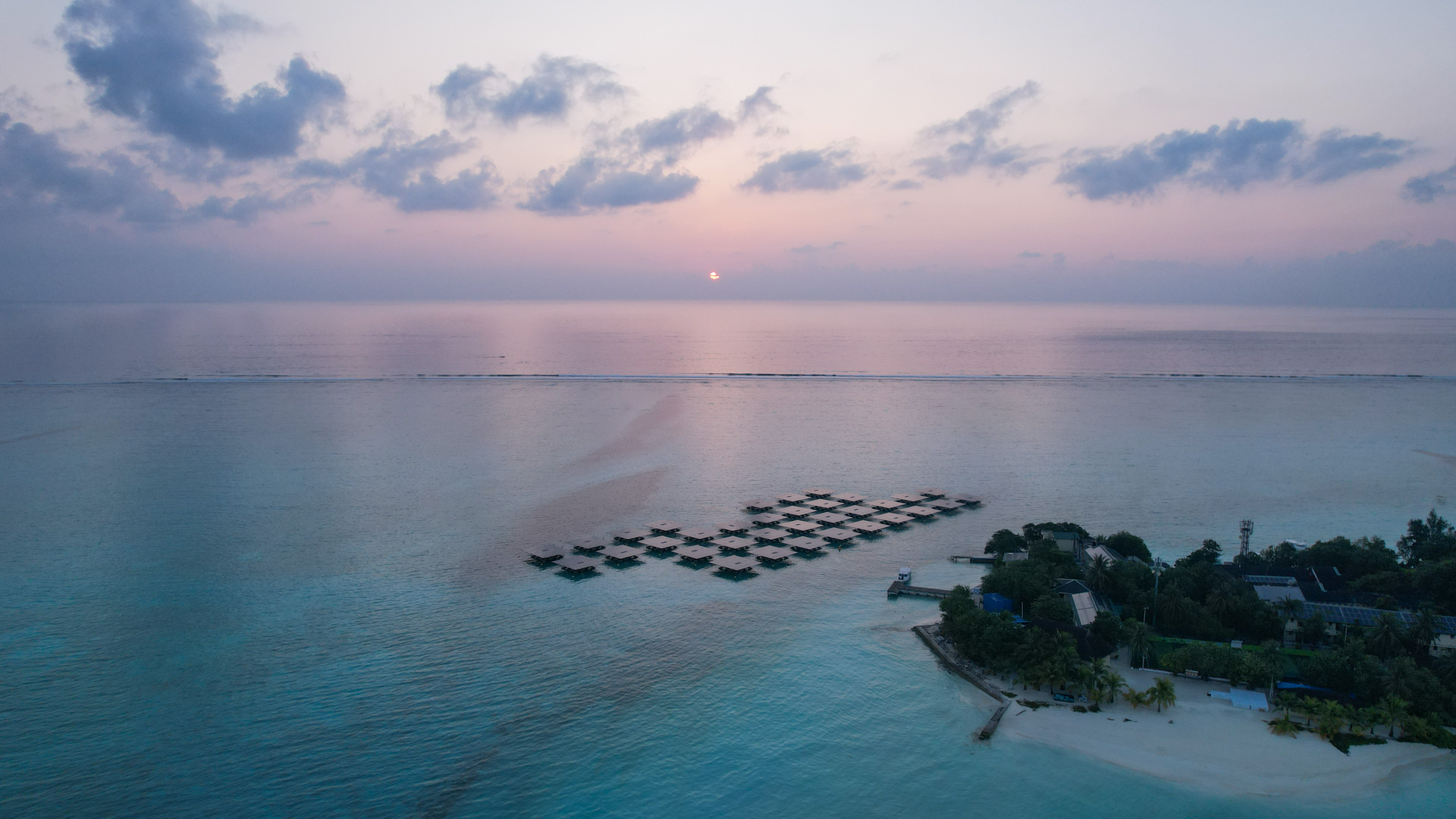
The TAJ Maldives Floating Photovoltaics project highlights what floating solar looks like when it moves from sheltered inland water into a far more demanding marine environment. Hazelett Marine publicly describes the installation as a utility-scale, near-shore floating solar project in the Maldives facing approximately 3 meter waves and challenging sea conditions. That immediately sets this project apart from standard reservoir-based FPV. In an ocean-exposed setting, the mooring system is not just a way to hold the platform in place. It becomes a core part of system performance, long-term durability, and fatigue management.
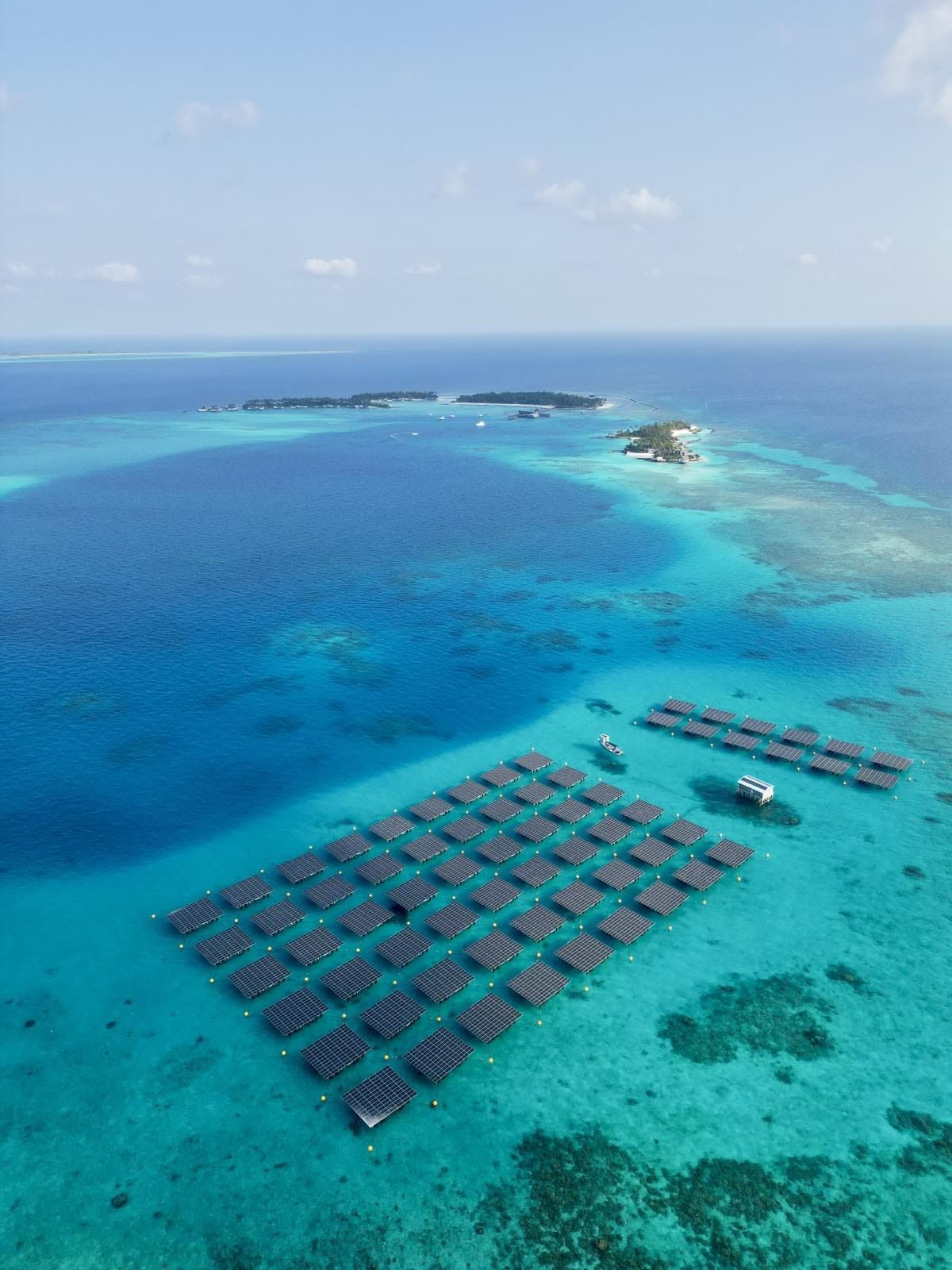
Public reporting on Taj-branded floating solar in the Maldives most closely aligns this project with Taj Exotica Resort and Spa FPV system. Swimsol describes that installation as a 1,083.36 kWp system combining 891.36 kWp of floating solar with 192 kWp of rooftop solar, supported by 896 kWh of battery storage in a solar-diesel hybrid configuration. Swimsol also notes that land and roof space on the island are limited, so floating solar at sea was used to expand generating capacity and allow the resort to run primarily on solar power during daytime hours. That end use matters because it shows the project is serving a live hospitality operation where dependable power, aesthetics, and environmental performance all matter at the same time.
The regional context makes the project even more compelling. Taj Exotica describes the resort as being located on Emboodhu Finolhu island in one of the largest lagoons in the Maldives, only about 15 minutes by speedboat from the airport. The Maldives is a geographically dispersed island nation where usable land is scarce and energy logistics are more complicated than they are in continental markets. Hazelett notes that the Maldives is especially vulnerable to climate change and remains dependent on imported fuel to power its grid, which helps explain why marine floating solar is such a strategic fit. In a tourism-driven economy where premium resort islands need constant electricity but cannot easily give up land for ground-mounted solar, ocean FPV offers a practical way to add renewable generation without taking space away from guest infrastructure or resort operations.
From a mooring manufacturer standpoint, the TAJ Maldives Floating Photovoltaics project is really a story about controlled flexibility. In near-shore ocean conditions, waves, currents, and wind create repeated loading cycles that can accelerate wear if the anchoring system is too rigid or if peak forces are allowed to transfer directly into the structure. The challenge is not to eliminate all movement. The challenge is to allow the array to move with the sea while preserving a stable operating envelope and reducing damaging load spikes. Hazelett describes its floating solar elastic mooring solution as a secure and flexible anchoring approach that allows floating solar arrays to move with waves and currents while maintaining a stable position. Hazelett systems can reduce peak forces on anchors by 30 percent to 80 percent by absorbing energy, which directly supports the fatigue-reduction story behind this project.
That combination of stability and flexibility is what gives the TAJ Maldives Floating Photovoltaics project its broader importance. It shows that floating solar is not limited to calm inland ponds. With the right mooring strategy, it can be adapted for exposed resort environments where the business case includes fuel displacement, land preservation, and a stronger sustainability profile. For Hazelett, this project is strong proof that elastic mooring can help utility-scale ocean Floating Photovoltaics operate more reliably in real marine conditions, where wave action and cyclical loading are part of daily life rather than rare edge cases.
Project Snapshot
- Hazelett publicly describes the TAJ project as a utility-scale, near-shore floating solar installation in the Maldives with approximately 3 m waves and challenging conditions.
- Public reporting for Taj Exotica Resort and Spa identifies a 1,083.36 kWp total system.
- That publicly reported system combines 891.36 kWp of floating solar with 192 kWp of rooftop solar.
- The system includes 896 kWh of battery storage.
- Project launch year is publicly listed as 2024.
- The grid setup is described publicly as a solar-diesel hybrid with daytime battery support.
- Swimsol states the system allows the resort to run primarily on solar energy during daylight hours.
- Client-provided project details identify Hazelett Elastic Mooring Systems as the mooring solution for the Floating Photovoltaic System installation.
Technical and Regional Context
- Taj Exotica says the resort is located on Emboodhu Finolhu island in one of the largest lagoons in the Maldives.
- Taj Exotica states the resort is about 15 minutes from the international airport by speedboat.
- The U.S. Department of State describes the Maldives as 1,190 islands across 20 atolls in the Indian Ocean.
- The same U.S. State Department summary says tourism contributes close to 30 percent of GDP and generates more than 60 percent of foreign currency earnings in the Maldives.
- Hazelett notes that the Maldives depends on imported fuel to power its grid, which strengthens the case for marine floating solar on resort islands.
- Hazelett describes elastic mooring systems to let floating arrays move with waves and currents while maintaining a stable position.
- Hazelett elastic mooring can reduce peak forces on anchors by 30 percent to 80 percent by absorbing energy.
Conclusion
The TAJ Maldives Floating Photovoltaic project demonstrates that the success of ocean floating solar depends as much on the mooring strategy as it does on the solar hardware itself. In this case, the challenge was not simply putting PV on water. It was stabilizing a utility-scale floating platform in near-shore marine conditions, managing repeated wave-driven loading, and helping reduce the fatigue that comes with life at sea.
For Hazelett, the TAJ Maldives FPV project is a valuable example of how elastic mooring supports next-generation floating solar in places where land is scarce and energy resilience matters. It shows that when marine exposure is addressed intelligently, floating solar can move beyond protected inland sites and become a practical renewable energy solution for island resorts and other coastal applications, supported by product capabilities described in the floating solar mooring systems, with additional project context available from Swimsol and destination details from Taj Exotica.

Hazelett Marine is not simply part of elastic mooring history.
We wrote it, and we will continue to advance it.
Speak With Our Engineering Team 1-802-909-0066
We wrote it, and we will continue to advance it.
Speak With Our Engineering Team 1-802-909-0066
Get In Touch
Tell us about your project or challenge and we will follow up promptly to help provide a solution.
Operations: Burlington, VT:
+1 (802) 909 0066