
Marina Cortez Project
Large Marina Expansion
Project Overview
Category: Marinas & Floating Infrastructure
Location: Mexico
Type of Project: Marina
Products Used: Hazelett Elastic Mooring Systems
Details of Installation: Improved performance and reduced maintenance.
Challenges Overcome: Scale and environment.
Collaborators: Bluewater Marine
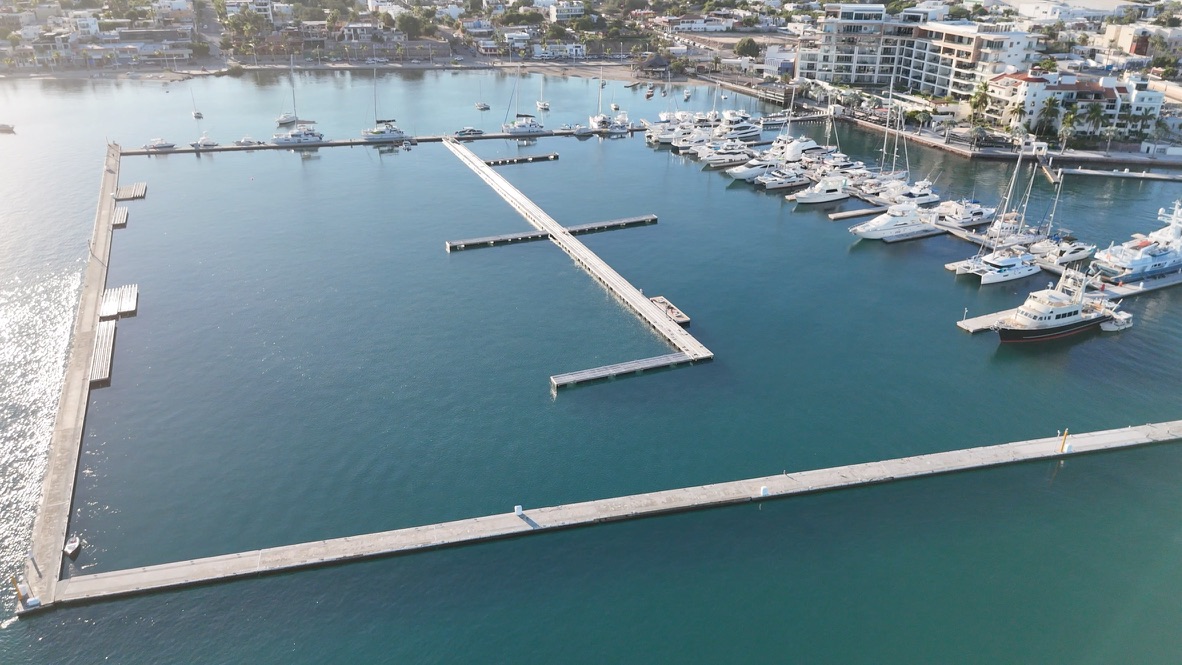
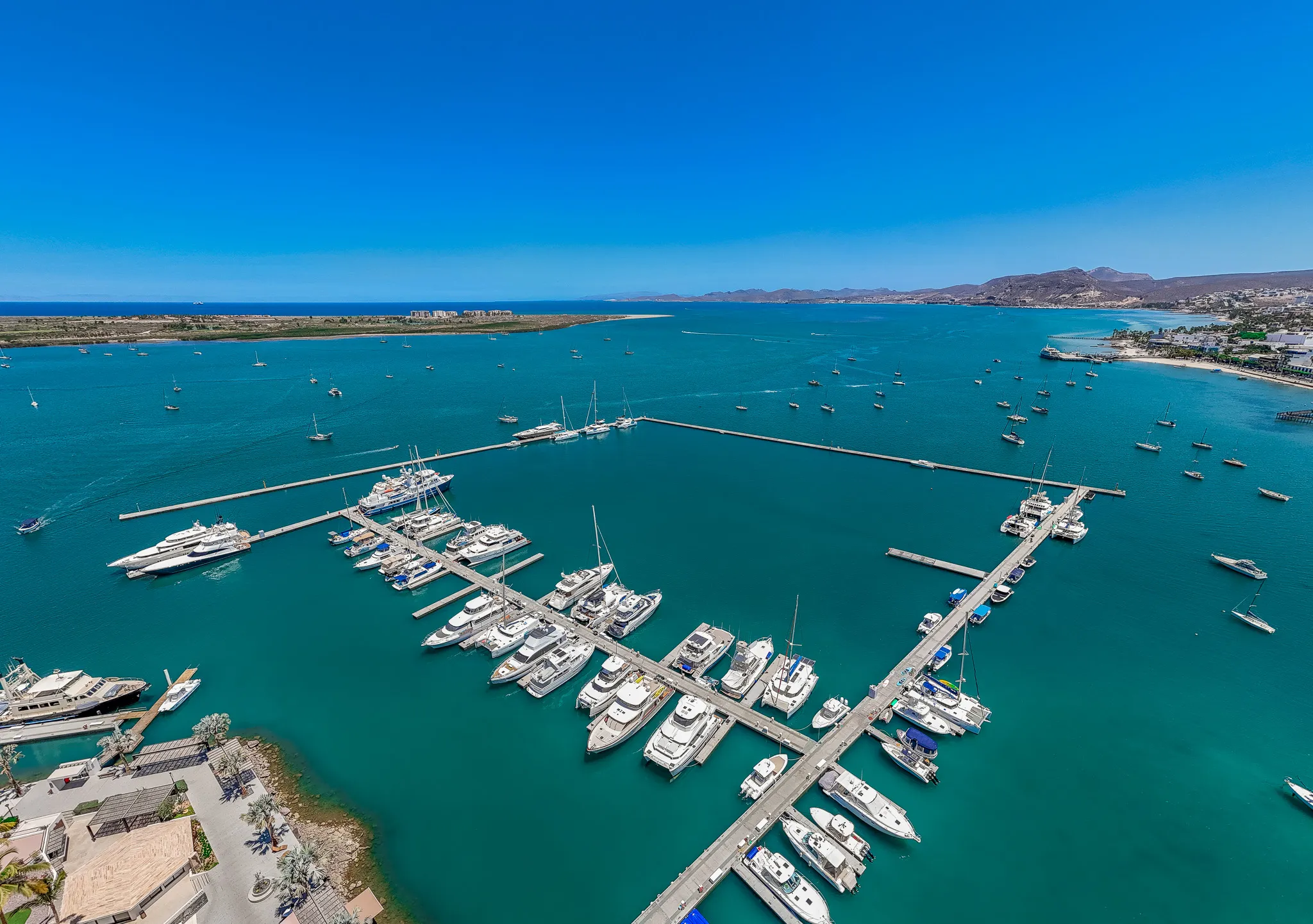
The Marina Cortez project in La Paz, Baja California Sur, is a case study of how elastic mooring can improve marina performance in a high-value waterfront setting where vessel traffic, guest expectations, and long-term operating costs matter equally. Public-facing Marina Cortez materials describe the facility as a full-service marina in the heart of La Paz with 24/7 security, liveaboard-friendly operations, and slip accommodations for vessels ranging from 40 feet to 200 feet. Local tourism listings identify the marina at about 50 slips. That berth range and urban location help explain why Marina Cortez was not simply a dock installation. It was a marina expansion and performance upgrade in a destination where uptime, dock stability, safe access, and reduced maintenance all directly affect customer experience and operator economics.
The Marina Cortez operating environment also adds technical pressure. La Paz is promoted by its tourism authority as the gateway to the Sea of Cortez, serving everything from small sailboats to megayachts and ecotourism vessels. GoLaPaz highlights the region’s boating ecosystem and destination role. Marina Cortez itself emphasizes its central location on the Malecon and direct access to Baja marine adventures. In practice, that means the marina has to work as both infrastructure and hospitality asset. Floating docks in this kind of setting need to remain predictable under vessel loading, wake activity, wind, tide, and repeated service cycles while staying attractive and easy to maintain in a very public waterfront environment.
From a mooring-engineering standpoint, the Marina Cortez project is best understood as a performance problem, not just an installation problem. Improved performance and reduced maintenance, which aligns closely with Hazelett’s public technical guidance on elastic dock mooring. Hazelett states that chain-anchored docks and wave attenuators tend to wander when tension drops and can jerk violently when the chain becomes taut again under wind and wave action. By contrast, DockMaster systems are typically installed under pre-tension so that loads remain more evenly distributed throughout the mooring pattern. Hazelett also states that elastic rodes maintain constant tension, reduce point loads and wind loads, and provide a gentler dock motion. For a marina like Marina Cortez, those are not abstract advantages. They go straight to structural fatigue, gangway comfort, hardware life, and service-call frequency.
The scale component is equally important. A larger marina expansion increases the number of interconnected load paths, dock interfaces, utility runs, and berth-side motions that have to be managed as one operating system rather than a collection of individual floats. Bluewater Marine and Dock Specialties publicly describes its work as structurally engineered aluminum floating docks, gangways, and marina systems designed for versatile configurations, utility accessibility, ease of installation, and low maintenance. That public company profile fits the collaborator role in the Marina Cortez project and helps explain how Hazelett’s elastic mooring system would complement the dock structure itself. Bluewater’s dock hardware and layout strategy address modular marina construction, while Hazelett’s elastic restraint helps control how that larger floating structure behaves once exposed to daily marine loading.
The environmental context matters too. Sea of Cortez marinas operate in a region globally recognized for biodiversity and boating appeal. Hazelett’s public product materials emphasize that its elastic rodes float above the seabed, reduce peak loads, and can repeatedly elongate more than 200 percent before returning to their original length. Hazelett also cites third-party testing indicating a single elastic rode can withstand more than 20 kN of force, while DockMaster product literature states a 12-rode system can provide 78 kN of force and that double and triple 10-foot systems can reach 60 kN to 70 kN working load with 240 kN break strength.
Taken together, the Marina Cortez project demonstrates how large marina expansion is not only about adding more berths. It is about building a floating system that can operate more smoothly, handle environmental loading more intelligently, and reduce the maintenance burden that often comes with conventional dock restraint methods. In a busy La Paz marina serving vessels of varied size in a tourism-driven waterfront district, improved performance and reduced maintenance are meaningful project outcomes, not marketing language.
Project Snapshot
- Marina Cortez is publicly described as a full-service marina in the heart of La Paz with 24/7 security and liveaboard-friendly operations.
- GoLaPaz lists Marina Cortez at 50 slips.
- GoLaPaz states the marina serves vessels from 40 feet to 200 feet.
- Marina Cortez states the facility was designed by yacht owners and marine architects for comfort, access, and safety.
- Hazelett states a single elastic rode can withstand more than 20 kN of force and can elongate over 200 percent.
- Hazelett states one DockMaster rode provides 6.5 kN of force at 80 percent stretch, while a 12-rode system provides 78 kN.
Technical and Regional Context
- La Paz is described as the gateway to the Sea of Cortez by GoLaPaz.
- GoLaPaz says La Paz marinas serve everything from small sailboats to megayachts and ecotourism traffic.
- Marina Dock Age describes Bluewater systems as structurally engineered for versatility and low maintenance.
- Hazelett states elastic moorings reduce point loads, wind loads, and provide gentler dock motion.
- Hazelett also states DockMaster systems are typically installed under pre-tension to distribute loads evenly.
Conclusion
The Marina Cortez project shows why marina expansion is as much a mooring-engineering challenge as a dock-layout challenge. In a destination marina serving vessels up to 200 feet in the center of La Paz, performance is measured by how the floating system behaves every day: how it handles wake and wind, how evenly it transfers loads, how comfortable it feels underfoot, and how much maintenance it demands over time.
For Hazelett, Marina Cortez is a strong case study in using elastic mooring to improve marina performance at scale. Public Hazelett product data supports the core technical story: constant tension, reduced peak and point loads, gentler dock motion, and lower wear on the overall system. Paired with Bluewater Marine expertise, that makes Marina Cortez a useful proof point for large marina developments that need better performance and lower maintenance in real operating environments.

Hazelett Marine is not simply part of elastic mooring history.
We wrote it, and we will continue to advance it.
Speak With Our Engineering Team 1-802-909-0066
We wrote it, and we will continue to advance it.
Speak With Our Engineering Team 1-802-909-0066
Get In Touch
Tell us about your project or challenge and we will follow up promptly to help provide a solution.
Operations: Burlington, VT:
+1 (802) 909 0066